

Fun's Over
A few remarks on how Authoritarians killed Satire and why Comedy isn't legal but dead

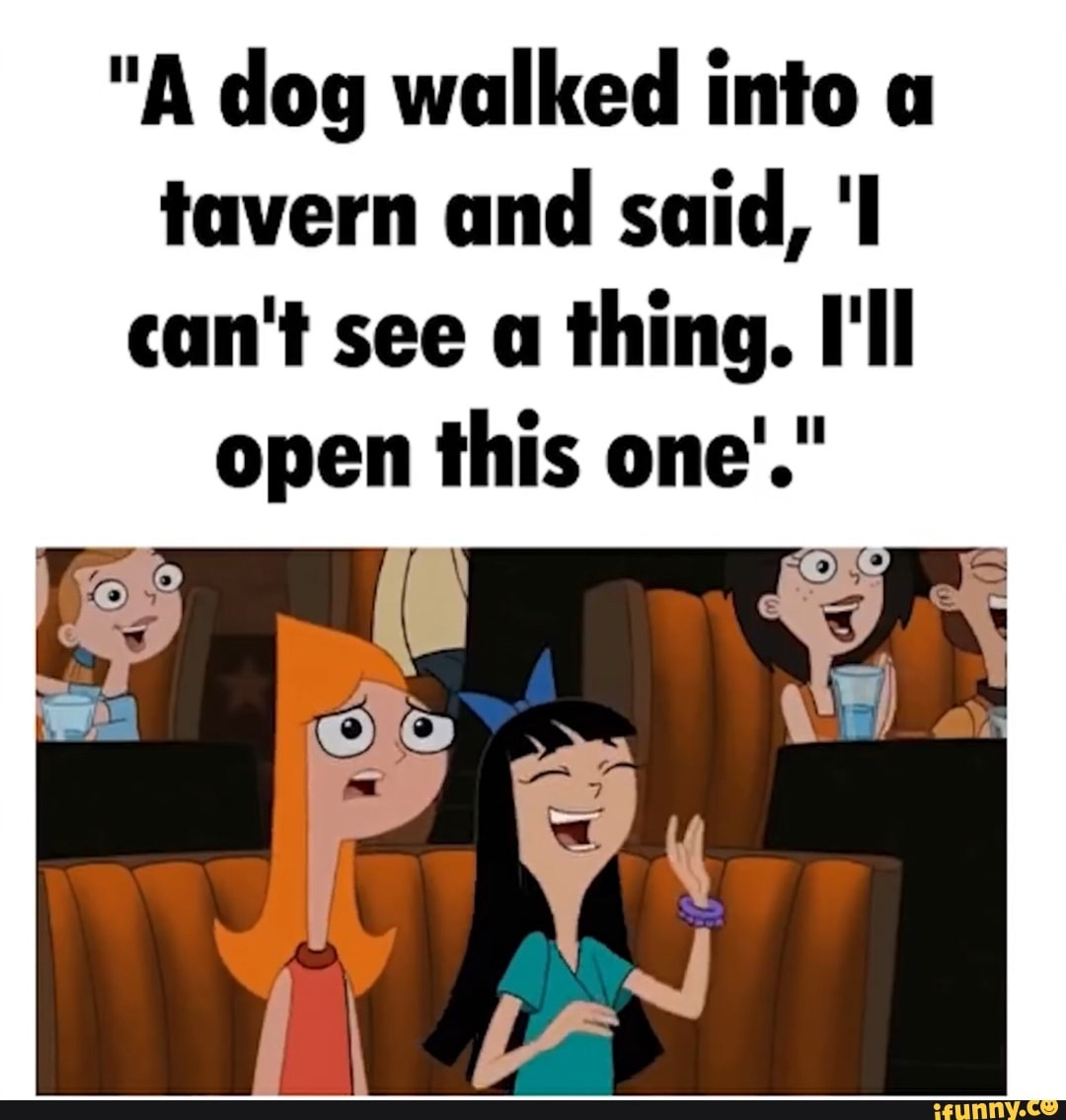
Do you know the joke about the dog in the tavern? He walked in and said: «I can’t see a thing. I’ll open this one.»
If you are a stand up comedian and are planning to take this joke on the road, you probably won’t be all that successful. The specific target audience for it is hard to find these days – the joke is one of the oldest known bar jokes and has been around since about 1900 BCE. As a matter of fact, the joke is so extremely old that we cannot even tell for sure whether or not it is indeed a joke or some other form of a proverb, possibly indicating the necessity to adapt to spaces.
What the joke or proverb actually means is actually rather irrelevant, as my main point can be easily understood independently of any given interpretation: Humour is a deeply context dependent activity. To land a joke doesn’t only require you and the audience to be aware of all the elements of the actual text, but also of a number of unspoken premises to relate them to. There has to be some sort of expectation that can be subverted or a double entendre that can be utilized in order for the joke to work. The implication of this is that humour carries an index that ties it to a certain social, historical, political and local situation. Getting the context is important and might even change the nature of any given punchline altogether. Consider the somewhat famous example of the "Jew Joke" versus a "jewish Joke". There may be a certain overlap between the former (understood as a joke at the expense of Jews) and the latter (understood as an example of Jewish Humour): yet without context, it might be impossible to tell which of the two categories you're encountering in any given situation. Similarly, it may very well be impossible to distinguish between Satire and sincerely held beliefs. The Internet has known about this phenomenon for some time now and christened it “Poe’s Law” – the impossibility to tell within any given Internet conversation whether or not an exaggerated satire might be the real thing, unless the author supplies some unmistakable marker of sarcastic intent. Some crazy person somewhere on this planet may after all hold the weirdest positions: and it’s far from impossible to meet them online in a heated discussion about their topic of choice. Originally, Nathan Poe had proposed this observation regarding Creationists, who were at the time among the crazier people you would encounter online regularly. All of this is, needless to say, a thing of the past.
We have caught up with Poe’s Law and don’t need to rely on a lunatic fringe anymore to examine the impossibility of contemporary satire. Instead, we have reached a societal point that provides us with news articles that seem to be satirical exaggerations and that constantly require us to either diligently confirm as much as possible right at the source or to simply believe what we are being told without any reliable inner barometer that would allow us to judge what is or isn’t a joke anymore.
Just last month, the Satire News Outlet published a news story several days before the actual story – that the Rolling Stone actually had had a scoop on was published “exclusively”: this time, however, as actual news.
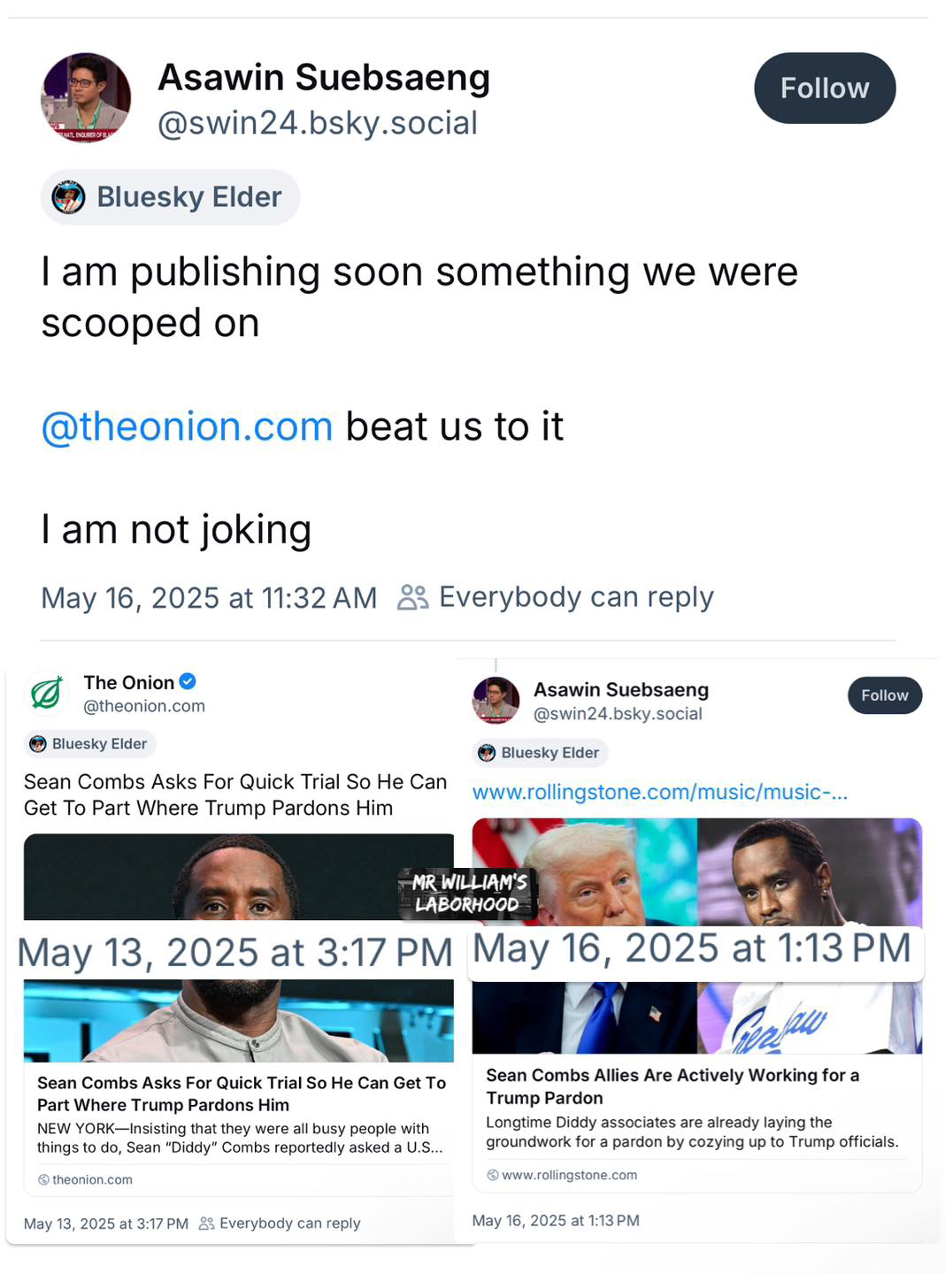
And even though this event had been painfully on the nose and was in itself an occurrence that people had been joking about for years, it’s obviously far from surprising or even singular. Something is fundamentally wrong with Satire. Or rather: Satire is probably still alright and has changed surprisingly little – something is fundamentally wrong with Reality. What is going on though?
A key component to understanding this inversion is to grasp why satire in its prior configuration could work to begin with. When Sigmund Freud tried to approach this issue in his book “Jokes and their Relation to the Unconscious” he still was concerned with “the Humorous”. The Humorous in this context is the third of three possible constellations that all fulfill specific functions within the psychological economy. The constellations and their functions are, according to Freud:

We are approaching this topic via humour as we still find the most heartfelt laughter in this place. When I say heartfelt laughter, I am referring to laughter that is originating from a place of Empathy and love and in some way mediated through feelings that are widely regarded as positive. It provides us therefore with more emotional light and warmth than its counterparts, that we still will have to at least address in this regard, as none of them remain unaffected from the material shifts that are eroding our ability to be humorous.
The ultimate psychological goal of all of these structures is to generate joy. Even if we are not Freudian, we are probably willing to grant this idea to some extent – we are concerned with the various forms of comedic activity as it pretty apparently produces joy for us. We feel good when we laugh, we enjoy smiling, when we engage in activities that are connected to Jokes, Humour and the Comical we tend to feel better than when we aren’t.
Whether or not we are willing to also subscribe to his additional idea that all of these forms are ultimately attempts to regain a lost infantile ability to experience pleasure that has been since psychologically barred from immediate jouissance is entirely immaterial: for now we aren’t concerned with the question why there is some sort of economy in the first place but merely with how the economies in question work.
But what is Freud even talking about when he says that the Humour allows us to engage in an economy in expenditure upon feeling? He provides us with the following example.
«An economy of pity is one of the most frequent sources of humorous pleasure. Mark Twain’s humour usually works with his mechanism. In an account of his brother’s life, for instance, he tells us how he was at one time employed on a great road-making enterprise. The premature explosion of a mine blew him up into the air and he came down again far away from the place where he had been working. We are bound to have feelings of sympathy for the victim of the accident and would like to ask whether he was injured by it. But when the story goes on to say that his brother had a half-day’s wages deducted for being ‘absent from his place of employment’ we are entirely distracted from our pity and become almost as hard-hearted as the contractor and almost as indifferent to possible damage to the brother’s health. On another occasion Mark Twain presents us with his family tree, which he traces back to one of Columbus’s fellow-voyagers. He then describes this ancestor’s character and how his baggage consisted entirely of a number of pieces of washing each of which had a different laundry-mark - here we cannot help laughing at the cost of an economy of the feelings of piety into which we were prepared to enter at the beginning of this family history.»
Twain, a Humanist if there ever was one, supplies us with tales of pitiful creatures, yet spares both us and them the embarrassment to treat them as beneath us. By injecting humor into the situation he dissolves the pity into laughter, by “making light of the situation”. It’s not that we sympathize with the contractor, even though our heart may be “as hardened as his” – instead, we are getting whiplashed by the sudden realization that reality may be even harder than just a broken set of bones and are reminded that something about this entire arrangement is entirely ridiculous. The Satire doesn’t work because it is inconceivable – on the contrary it works precisely through the realization that conjectures of this type happen all the time on a lesser scale, and as we are forced to connect this epiphany with the strength of our emotion of pity we are distracted from the latter.
This model is even clearer when we consider another classical satire. Jonathan Swift’s infamous “Modest Proposal”. Swift famously goes to great lengths to evoke pity within the reader when he describes the plight of Irish Children – just to crush this feeling entirely by then suggesting to just serve them as delicacies for the Elite. After all, it would be quite the bargain: “A young healthy child well nursed, is, at a year old, a most delicious nourishing and wholesome food, whether stewed, roasted, baked, or boiled”.
The pity that had been summoned before is hit by a sudden shock, maybe some disgust, then amusement as the reader realizes that one cannot possibly be serious about this. There is a relief that someone can be as level-headed as Swift and still be cynical even when considering a situation that is already unbearable as it is. Instead of focusing on the tides of emotion that may be overwhelming, one observes a mind in action that keeps its composure, thereby realizing that oneself may also very well be able to do this – there is no need to cry to the gods yet, as we as humans may calmly look at even the most adverse circumstances and potentially find a solution. And what’s more: in reading such a text, we may also find a kindred spirit, an ally in the fight against the circumstances that almost moved us to tears.
More recently, we have famously seen this in Late Night Shows and comedy programs that became important news sources for many. Liberal and in some cases vaguely leftist comedians like Stephen Colbert, John Stewart or John Oliver have become important sources of information for many that feel otherwise overwhelmed with the events. Surely the technique of ironically exaggerating the circumstances is merely one among many ways to engage in such an ”economy of expenditure upon feelings” – it is however precisely the one that interests us the most, as it is the point that experiences an inversion. Satire no longer exaggerates, but anticipates and, in some cases, merely comes too late as actual events get mistaken for satirical takes.
If we want to consider why this inversion takes place, we should consider why exactly this exaggeration works in the first place. Freud points out that the humorous maneuver consists in a displacement. Rather than repressing the imagination that causes displeasure altogether, it retains the ideational content and thus surmounts the defense automatism that would otherwise be triggered. In the case of an exaggerated reality, the model can therefore be described as follows: in a first step, we approach the actual ideational content that consists in the actual event. This event may be connected to intense pain and pity, as it was the case in Swift’s description of the starving Irish Children. The knowledge of this reality is cruel and almost unbearable and upon learning of it, we may escape into repressive fantasies like the strict denialism of “This can’t be, this is made up” or flee into a rosier future. “Surely, someone will soon solve this,” we may say. Others may simply avert their eyes and claim that they cannot deal with this sort of news and surely, there are a select few that simply take a general interest in things such as these and are able to face this reality directly: but even they will often be found after their informational events, engaging in some sort of gallows humor over a beer or two.
In any case, the ideational content is imprinted and a mechanism will be found to deal with it and it is the role of humor to avoid mere repression. Exaggeration now retains the logic of the event and expands it beyond the boundaries of what can still be plausibly conceived. It says: “Sure, the Elites may be feasting while the Children are starving, so the Children are dead anyway, why not just be clever about it and let them just fill their bellies with the Children, as they seem to not object to their suffering in the first place?”
By accepting all the premises of the situation and leading them to an absurd, prohibited, shocking conclusion, Satire kills two birds with one stone. On the one hand it showcases that it could be worse and makes reality more bearable by comparison, on the other hand it points out that untenable circumstances have already been reached and that every civilized person can surely agree that the situation has become preposterous. By underlining that there is something fundamentally preposterous about the exaggerated situation that everyone would shy back from actually championing these things, an imagined community is created that can agree that something has to be done about this. Sometimes, this shocked amusement may even translate to political action.
However, already now we can see how this model will falter in theory and has faltered for us: it only works as long as there is some consensus that can in principle be agreed upon concerning the things that are inconceivable within a civilized society. It rests upon a prohibition of certain atrocities that may very well be enacted – but must never be enjoyed.
Herein lies the difference between deportations that happen in the dead of night and those that are later broadcast as ASMR videos. Capitalist society has and will always run on coercion, force, exclusion and cruelty. However, it does make a difference whether these things are perceived as necessary evils and dirty secrets or sources of a sweet, warm feeling in your belly and a tingling behind your forehead.
The collapse of Satire is a collapse of the prohibitions that made credible exaggerations possible. It is a symptom of an ideological superstructure that is no longer fit to maintain its base and we are experiencing its crisis. In fact, it may very well be worse than that already. The slogan has become overused, yet it is hard to find a phrase that encapsulates the historical situation as well as Gramsci’s: “The old world is dying, the new world struggles to be born – now is the time of monsters”.
A crisis of the superstructure would entail a situation in which it is unclear whether or not the edifice would hold. Yet, we find ourselves in a moment that could be more accurately described as “staring at the ruins”. Some of us just haven’t gotten the memo yet. It may not be obvious at first glance, but this question is intimately connected to our analysis of the question of humor. This is certainly not the case because all of this is particularly funny or because humor allows us to think in an enlightened manner. Rather, the psychological economy of humor provides us with clues concerning the social unconscious. If exaggeration became impossible because formerly prohibited impulses are no longer prevented by a shared ideological framework, there had to have been a moment during which these prohibitions ceased to be effective. And indeed we could all witness them.
As the excesses of neoliberalism and growing societal pressures made it increasingly hard to fulfill the expectations tied to any of the traditional models significant parts of the cultural apparatus – those machines that Althusser would have called Ideological State Apparatuses – retained their adherence to these models. Even though the entertainment industry tried to incorporate the changes that capitalism’s injunctions put upon society, others moved far slower. The structure of the family rarely reevaluated its premises, the party system remained for the most part tied to the sociological core constituencies or what it perceived as such. The Church – as so often – moved in its own way and the erosion of working class institutions and movements left little space for autonomous development on this front. Yet, times were changing and societal morality eroded under the pressures of capitalist reproduction. As in Marx’ time, all that is solid melted into air and as laws lost their meaning for the wealthy, the collective unconscious took note.
The erosion of norms didn’t immediately translate itself into humorous excess. Rather, a collective paranoia started festering within the ideological superstructure. Among the traditionalists and other partisans of the established order beliefs started manifesting that were obsessed with dark kabals, secret societies and networks of unspeakable depravities. As corruption and excess were routinely allowed to reign free – the reckless speculation that caused the 2008 Financial Crisis notoriously didn’t lead to any notable wave of arrests – the suspicion was arguably somewhat warranted that there would be even worse, unseen parts of the social order. As ever larger parts of the social grew so depraved that it became untenable to maintain disgust in them, the spectre of something worse started haunting millions. If the existing order was already the good one and still so bad, how dark did the things below the hood have to be?

By the time the Authoritarians took power, they had already accepted this gospel. By now, we have reached a stage where the President of the United States – without a doubt one of the most powerful positions in the entire world – can confidently speculate about his predecessor being a “robot-clone” without causing an outrage. What would have passed as a humorous quip and satirical exaggeration just a few years ago has become an actual, not even particularly noteworthy, news story. As the authoritarian creed had been for years that no one had any morals any more to begin with, they started enacting this precise program as policy: and a cruelty that has hardened itself against any kind of feeling is impossible to reach with satirical means.
The necessity for humor is tied to an economy in expenditure upon feeling: if means have been found to repress or inhibit the feelings altogether, it becomes obsolete. This is best exemplified by so-called Comedian Greg Gutfelds remarks on the deported Abrego Garcia during his appearance in the talkshow the view. When it is pointed out to him that he cannot possibly be ok with an innocent man being interned in a concentration camp, he replies that he “does not have the mental shelf space for this”. Significant parts of the global population are at this point so far removed from the common notion of humanity in many people’s minds that their demise becomes insignificant. Since the inhibition that provided the conditio sine qua non for the emergence of humor simply doesn’t exist anymore in these people, they also become unable to understand the efforts that satire still puts forth. What somebody at the Onion might consider an outrageous dark parody of hate filled lunacy is for Stephen Miller just a thought. It stands to reason that this is at least partly the root of the Right’s conviction that Progressives have no humor at all: like a Shibboleth, they have become entirely unable to recognize it if they encounter it in the wild or to even understand the principle behind it.
Donald Trump is funny – sure. This isn’t however a result of him being witty or particularly eloquent. Rather, his funniness is a direct function of the fact that he lacks any kind of inhibition that would prevent him from saying things that other people merely express as a joke. His musings that he could shoot somebody at the fifth Avenue without having to fear repercussions aren’t a clever quip but merely a deliberation on something that he probably shouldn’t do although he very well could. Yet, the point remains: between those that enact policies that seem like satire and those that do the same satire a fundamental rift has opened that runs so deep that it seems almost impossible to bridge.
Those that are still able to perform satirically, even though they might be late, retain fundamental values that others have abandoned – they may joke about them, they may not see them as sacrosanct, but they have a steadfast belief in norms and morals that should be so universal that anybody can acknowledge their violation as nothing but ridiculous.
That others are already enacting these very policies is an indicator that Satire has no power anymore. It has become anachronistic. In order for it to become effective again, we first have to reestablish these norms as shared ones: how this division may be overcome is a question we must answer. It seems that it won’t be with ridicule, as they won’t get the joke and we will be the butt of it.
Until then… fuck it. Race war.